


Article: What is candlelit yoga?
What is candlelit yoga?
Candle yoga refers to two distinct practices: trataka, an eye-fixing exercise inherited from hatha yoga (literally "force" or "effort" in Sanskrit), a term which itself means "to look at" or "to fix."
Sometimes, it also refers in a broader sense to yogic practices performed by candlelight. Some yoga practitioners thus combine yoga, meditative practices, and relaxation within a single session. Trataka, however, is generally practiced alone, while candle yoga classes can be done in groups in a guided manner during sessions lasting about an hour and a half.
Discover in this article how to conduct a candle yoga session and which candle to choose for your yogic practice.
Candle yoga or trataka?
Trataka, or candle meditation, is a concentration exercise from hatha yoga, a branch of yoga centered on the body, postures, breathing, and purification techniques. Conceived as a preparation for meditation, trataka consists of fixing a point without blinking, then keeping the eyes closed.
In this tradition, the gaze is considered the guide of the mind. Immobilizing it is equivalent to immobilizing one's thoughts and reducing their flow as much as possible, by concentrating on the movement of a candle flame or on a part of the body.

By then closing the eyes, one continues the exercise with the afterimage, that luminous trace that persists for a few seconds behind closed eyelids. It is a practice that seeks inner movement through an external anchor point.
But trataka is also a kriya, an act of purification, before being a tool of mental discipline, which classical yoga calls dharana, or concentration. It is one of the six traditional purifications (shatkarma) of the Hatha Yoga Pradipika, a 15th-century text written by Svātmārāma. The latter places his teaching in the lineage of Matsyendranath, a founding figure of the Natha tradition from which hatha yoga originates.
Other more recent practices also bear this name, without any direct link to this tradition. Candlelight yoga in particular is a yoga session in a studio that mixes hatha and yin yoga, a 20th-century evolution of Taoist yoga, in a dimly lit atmosphere, lasting about an hour and a half.
|
Trataka |
Candlelight class |
|
|
What it is |
A purist, eye-fixing exercise |
A recent, collective yoga session |
|
Where and how long |
Alone, at home, between five minutes to start and up to 30 minutes |
In a studio, in a group, about an hour and a half |
|
What is worked on |
Concentration |
Relaxation and letting go |
How to practice trataka at home?
Step 1: place the candle at eye level
In a dark, quiet room without drafts, place your candle on a low stand so that it is at eye level when you are sitting in a meditation position.
Step 2: prepare a comfortable seat
Sit on the floor on a yoga mat or cushion, at a distance of 50 to 80 cm from the flame. The important thing is to have a comfortable sitting posture so as not to disrupt your session with back or neck pain.
Take several inhalations and exhalations, relax your shoulder, neck, and throat muscles, while keeping your back straight to avoid tension.
Step 3: fix the flame
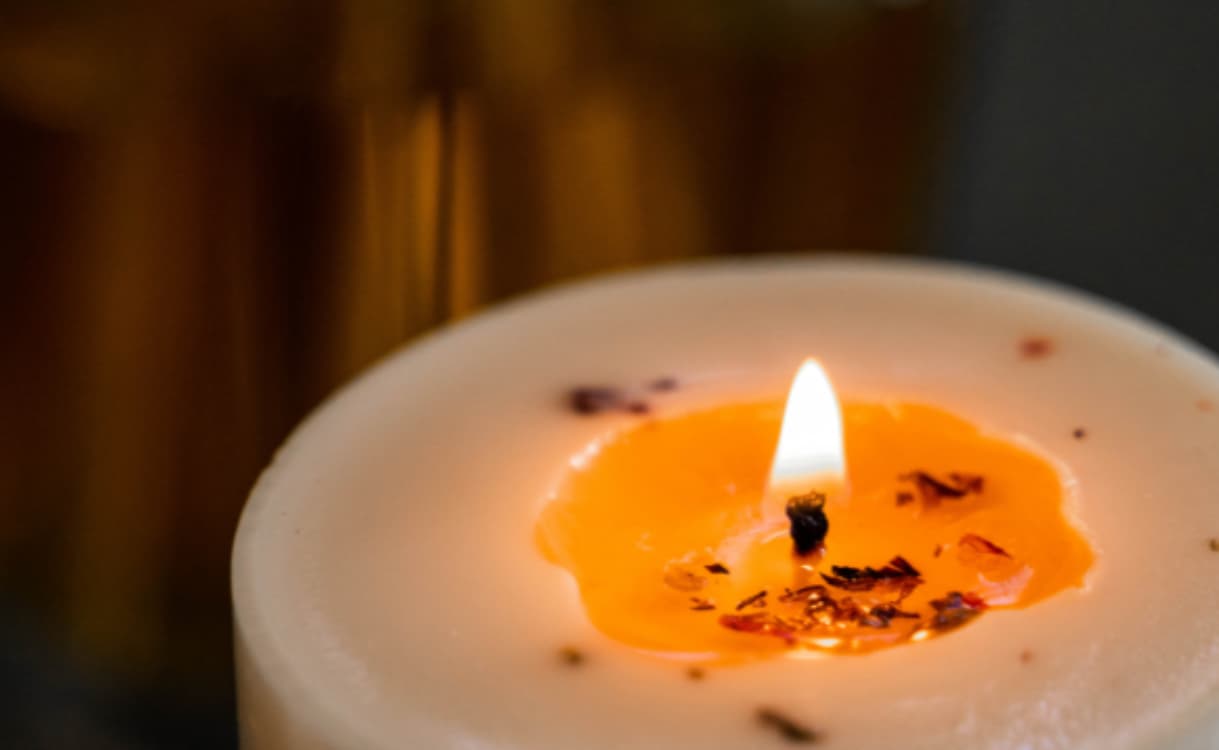
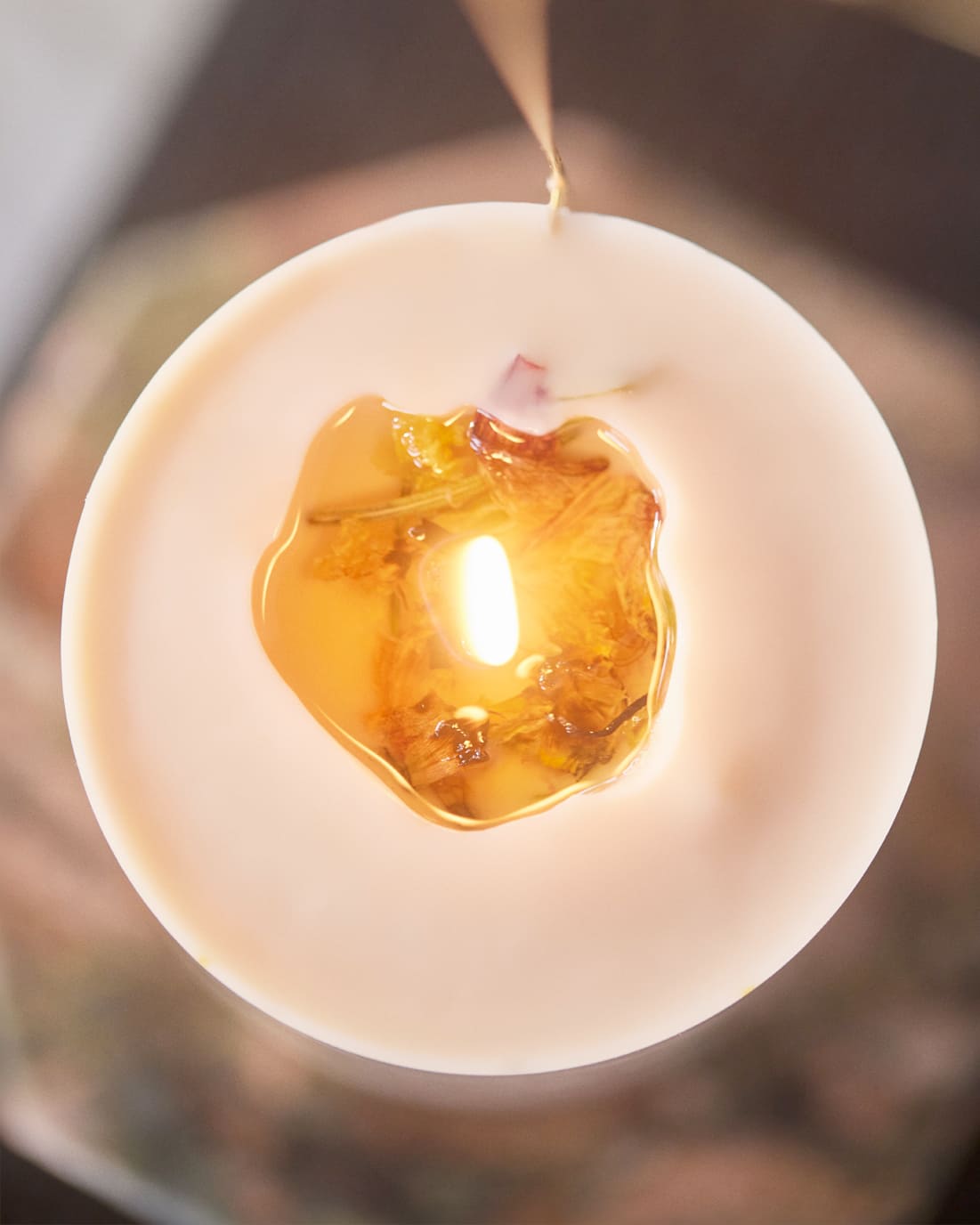
Observe the movement of the flame and try to perceive the variations in its color and clarity. Fix your gaze on the brightest point for five minutes. If your eyes water, this is not a goal to achieve. Tradition, however, views this as a purification of the eyes.
Step 4: close your eyes for 5 minutes
By closing your eyes, you will continue to see the dancing afterimage of the flame and perceive colors. Direct your attention to this and continue your introspective work.
To learn more, also see our article "How to create a zen atmosphere at home?".
How long does a candle yoga session last?
It is generally recommended to practice for 10 minutes on your own, but 5 minutes is enough to start. Some group sessions can last up to 30 minutes.
What are the benefits of candle yoga?
A study published in Frontiers in Psychology, conducted on 41 participants over two weeks, for 20 minutes a day, suggests an effect of trataka on working memory and executive functions. The study does not measure the effects on stress or sleep, but this is a point regularly highlighted by meditation enthusiasts.
In the hatha yoga tradition, trataka is also practiced to stabilize the mind, in connection with the inner fire of the Manipura and the image of the third eye (ajna chakra). To go further, mindfulness exercises follow a similar logic.
Which candle to choose and what precautions to take?
To help you in your meditative practice and enjoy the natural benefits of plants, choose candles made of natural ingredients. Synthetic fragrances contribute to indoor pollution and can be harmful to occupants' health.
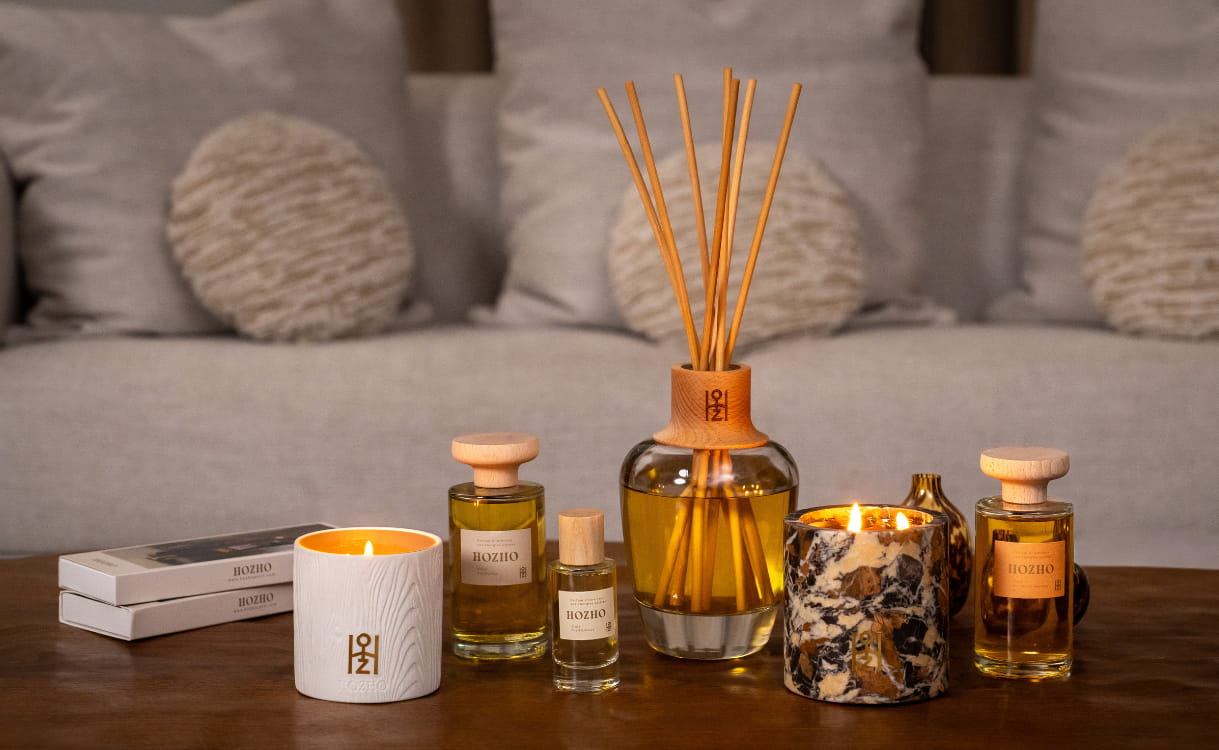
HOZHO energy candles are made from vegetable wax and plant extracts, feature a cotton wick, and are the result of French artisanal manufacturing. Harmonizing and protective synergies are specifically designed to accompany your meditative practices thanks to their effects on the energies of your spaces.
Discover in particular our selection of meditation candles and the ingredients we select, such as sandalwood, red rose, palo santo, sage, patchouli, or myrrh.

Candle yoga: your questions, our advice
Is trataka dangerous?
No, but there may be contraindications in cases of eye fatigue, cataracts, glaucoma, myopia, astigmatism, or epilepsy. In case of any eye disorder, it is best to seek medical advice before starting.
What are the benefits of candle meditation?
Candle meditation helps fight stress, improve sleep quality, and promote nervous relaxation, calmness, and serenity. It is also used in introspective practices.
How do you do the candle position in yoga?
The "candle position" actually refers to a yoga posture, sarvangasana, so named for its vertical shape that resembles a lit candle. It has no connection to the flame or to trataka; it is a balance posture in its own right.
Sources: Swathi, P. S., Bhat, R., & Saoji, A. A. (2021). Effect of Trataka (Yogic Visual Concentration) on the Performance in the Corsi-Block Tapping Task. Frontiers in Psychology.



,%20a%20term%20which%20itself%20means%20%22to%20look%20at%22%20or%20%22to%20fi...)