
What is olfactory meditation?

Olfactory meditation uses scents as a means of concentration, breathing, and self-connection. It's a practice of consciously inhaling a scent, then observing what it awakens in the body, emotions, memory, and train of thought.
Depending on the context, it's also referred to as meditation through scent, conscious olfaction, or sensory meditation. It helps to access a state of well-being, letting go, and mental calm. Conscious breathing is also recommended to combat stress and anxiety, boost self-esteem, promote letting go, and relaxation.
Discover in more detail in this guide what olfactory meditation is, its benefits, and how to choose the right fragrances to accompany your sessions.
Definition of Olfactory Meditation
Olfactory meditation involves focusing attention on a scent and using it as an anchor. The fragrance guides breathing, refines body perception, and accompanies the observation of thoughts, sensations, and emotions.
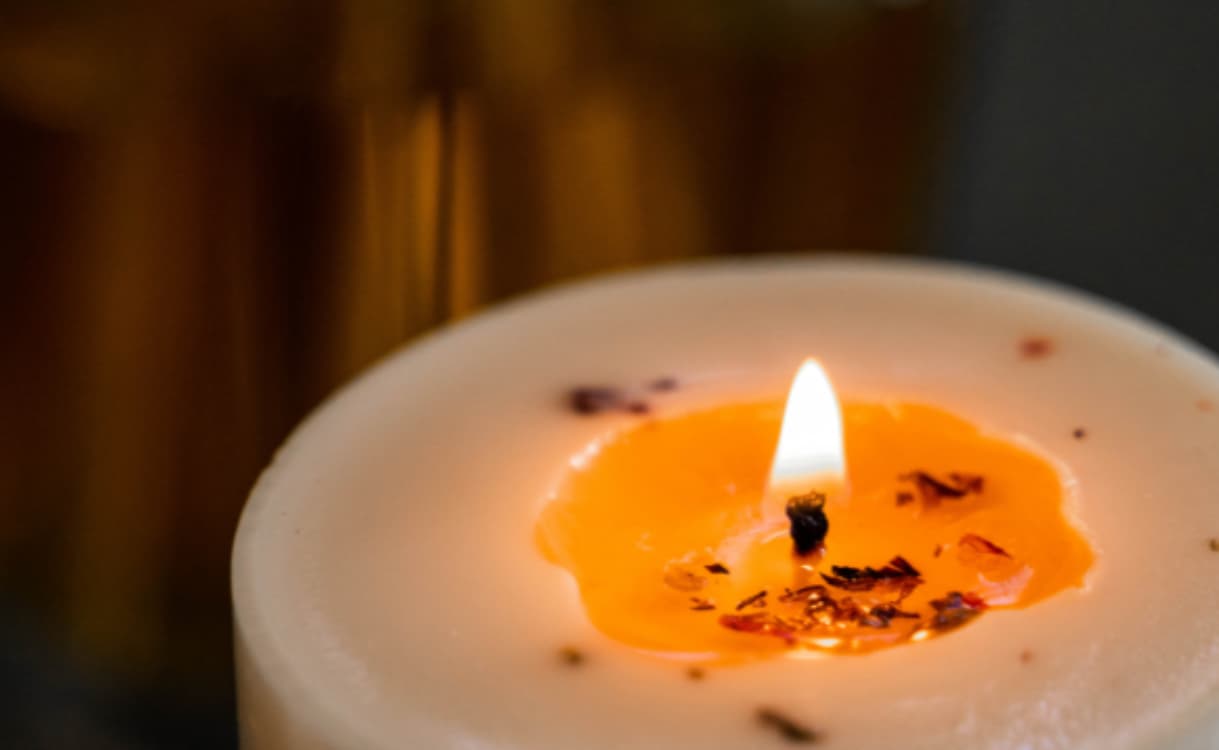
Like the flame in candle meditation, also known as Trataka, or like the sound of a gong in certain contemplative practices, scent is a sensory benchmark. It helps to return to the present moment when the mind wanders or attention disperses.
When it relies on a fragrance, incense, aromatic resins, a scented candle, or certain essential oils for meditation, this practice engages the nose, breath, and inner listening. It invites slowing down, observing what appears, and letting the body react naturally. A scent can also awaken a memory, soothe a tension, or give rise to a mental image.
Breathing plays an essential role here. With each inhalation, aromatic molecules are captured by the olfactory receptors in the nose and then transmitted to the brain. With each exhalation, the body relaxes, the mind slows down, and attention returns to breathing. When gentle, regular, and slightly longer than the inhalation, exhalation can promote parasympathetic nervous system activity, associated with rest, recovery, and stress regulation.
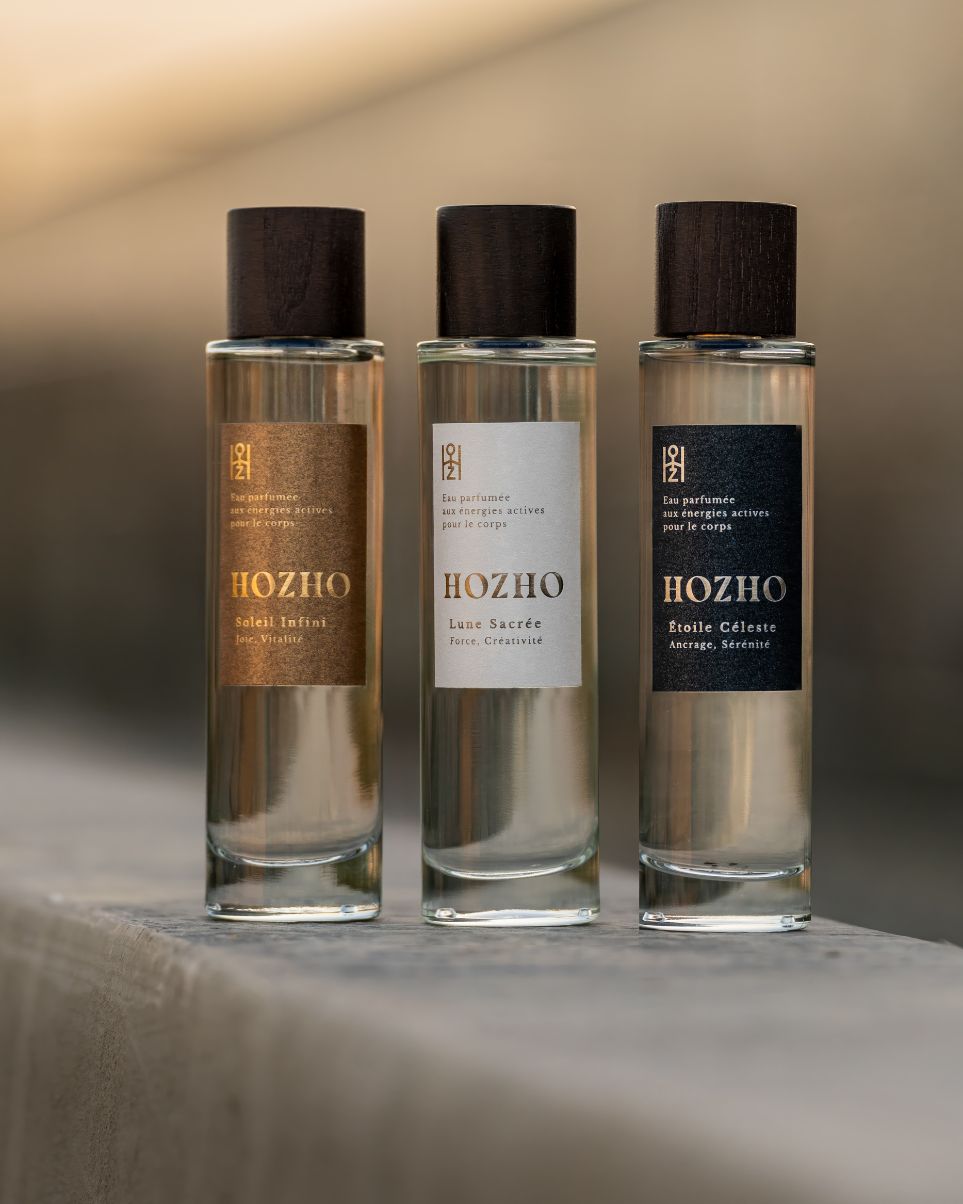
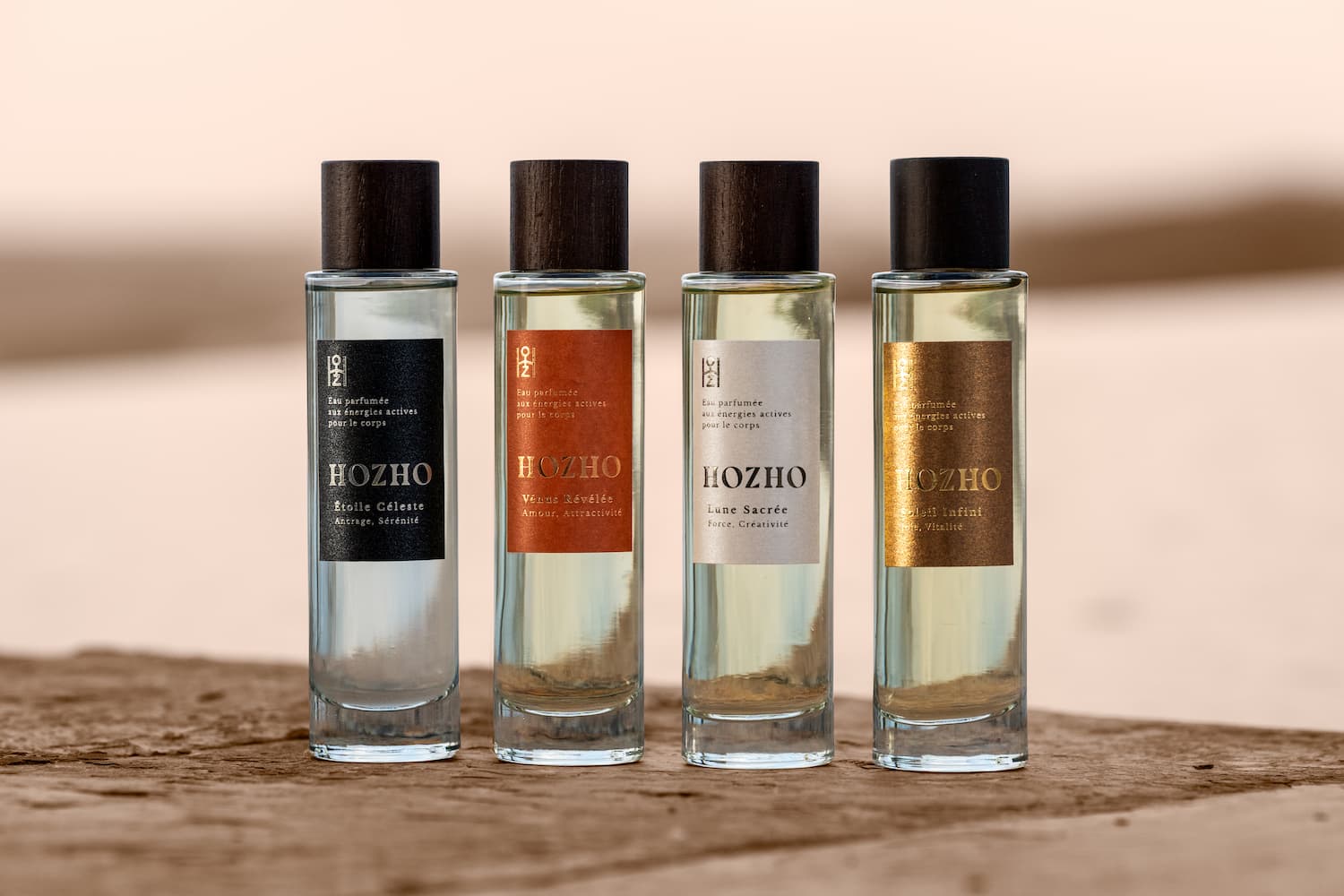
Olfactory meditation can be practiced with a vial, an olfactory strip (also called a smelling strip), perfume, a candle, resins, incense, or essential oils. The choice of fragrant material is very important: a balanced composition created from natural materials with recognized aromatherapeutic or energetic properties will create a favorable climate for recentering and calming.
>> Discover HOZHO energetic scented candles <<
Where does the use of scents in meditation and wellness practices come from?
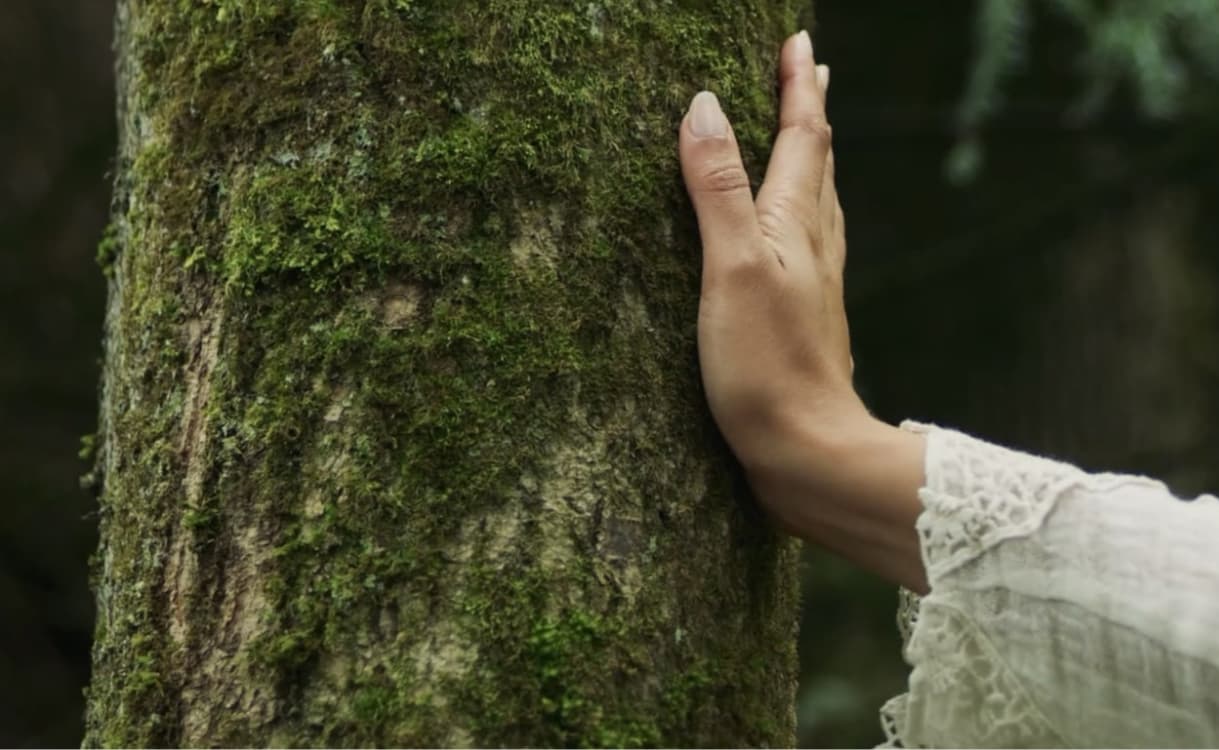
The use of scents in meditation, healing, and contemplation practices has existed for centuries in many cultures. Long before being studied for their neurophysiological effects on emotions, aromatic plants, woods, flowers, and resins already accompanied acts of purification, passage, prayer, or appeasement.
Certain essences remain pillars of these traditions:
- Sandalwood promotes elevation of the spirit, meditation, and relaxation;
- Palo santo purifies spaces by eliminating stagnant energies and raising energetic vibrations;
- Lavender, antiseptic and relaxing, leads to calm and rest;
- Rose stimulates heart opening and emotional healing;
- Citrus fruits diffuse a luminous clarity that stimulates vitality.
These natural materials, endowed with vibrational virtues, create a sensory framework conducive to the elevation of inner states and the regulation of surrounding energies.
Olfactory meditation naturally fits into this heritage. At the crossroads of mindfulness, aromatherapy, and aromachology, it relies on the evocative power of scents to align the body with the spirit.
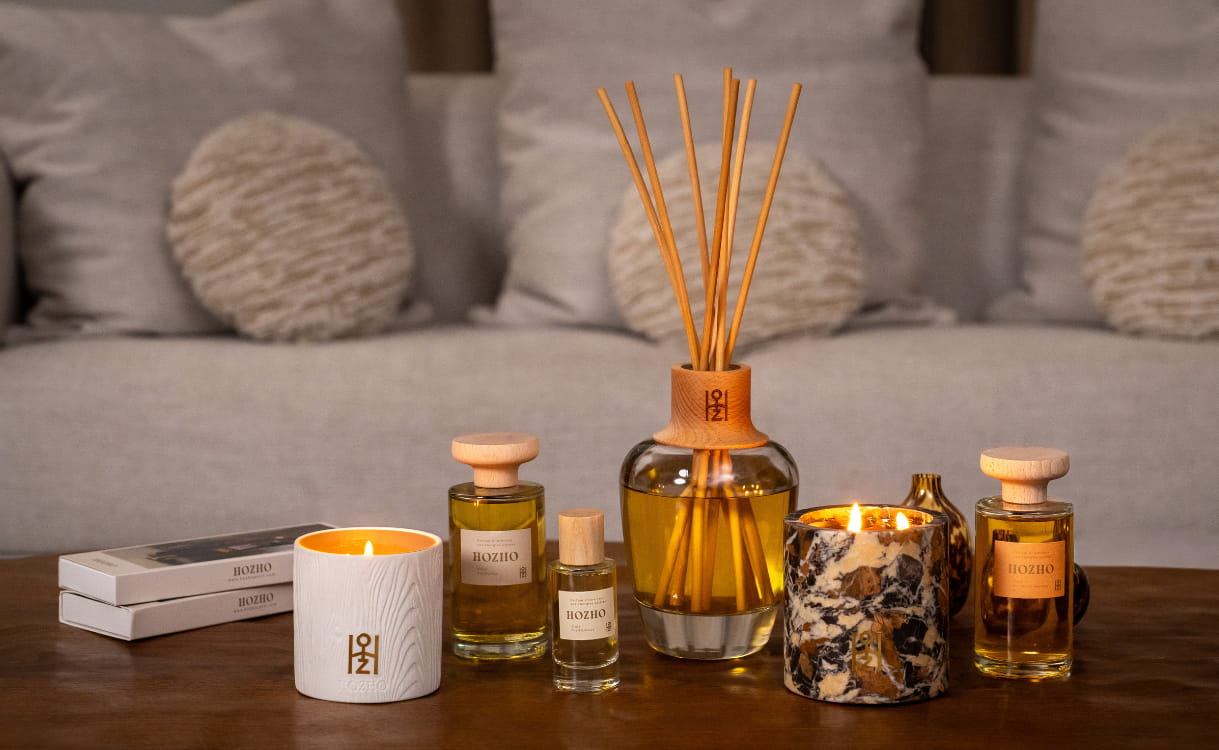
HOZHO extends this heritage with both an energetic and sensory approach to fragrance. Crafted by hand in France, our candles, home fragrances, and diffusers are true fragrant energetic remedies for the home, body, and soul. They are companions for your daily rituals, whether it's a yoga session, a meditation time, a creative surge, or a moment of pure relaxation.

HOZHO energetic scented home care
Why do scents affect our emotions and memories?
The sense of smell has a direct relationship with memory and emotions. When a scent is inhaled, aromatic molecules are captured by the olfactory receptors located in the nose, then transmitted to the brain. In a few moments, the brain recognizes the scent, associates it with an impression, and qualifies it as pleasant, familiar, enveloping, invigorating, or uncomfortable.
This reactivity is due to the privileged link between smell and the limbic system, involved in emotions and memory. The amygdala participates in emotional processing, while the hippocampus is involved in the formation and reactivation of memories. A fragrance can thus bring back an olfactory memory with singular intensity: the atmosphere of a home, a season, a person's skin, a place, or a moment thought to be forgotten.
This mechanism is the basis of the concept of anchoring. By voluntarily associating a scent with an intention, an inner state, or a repeated ritual, this scent can become a sensory benchmark. It then supports returning to calm, conscious breathing, and introspection. With repetition, the body recognizes this olfactory signature as the beginning of a time dedicated to recentering.
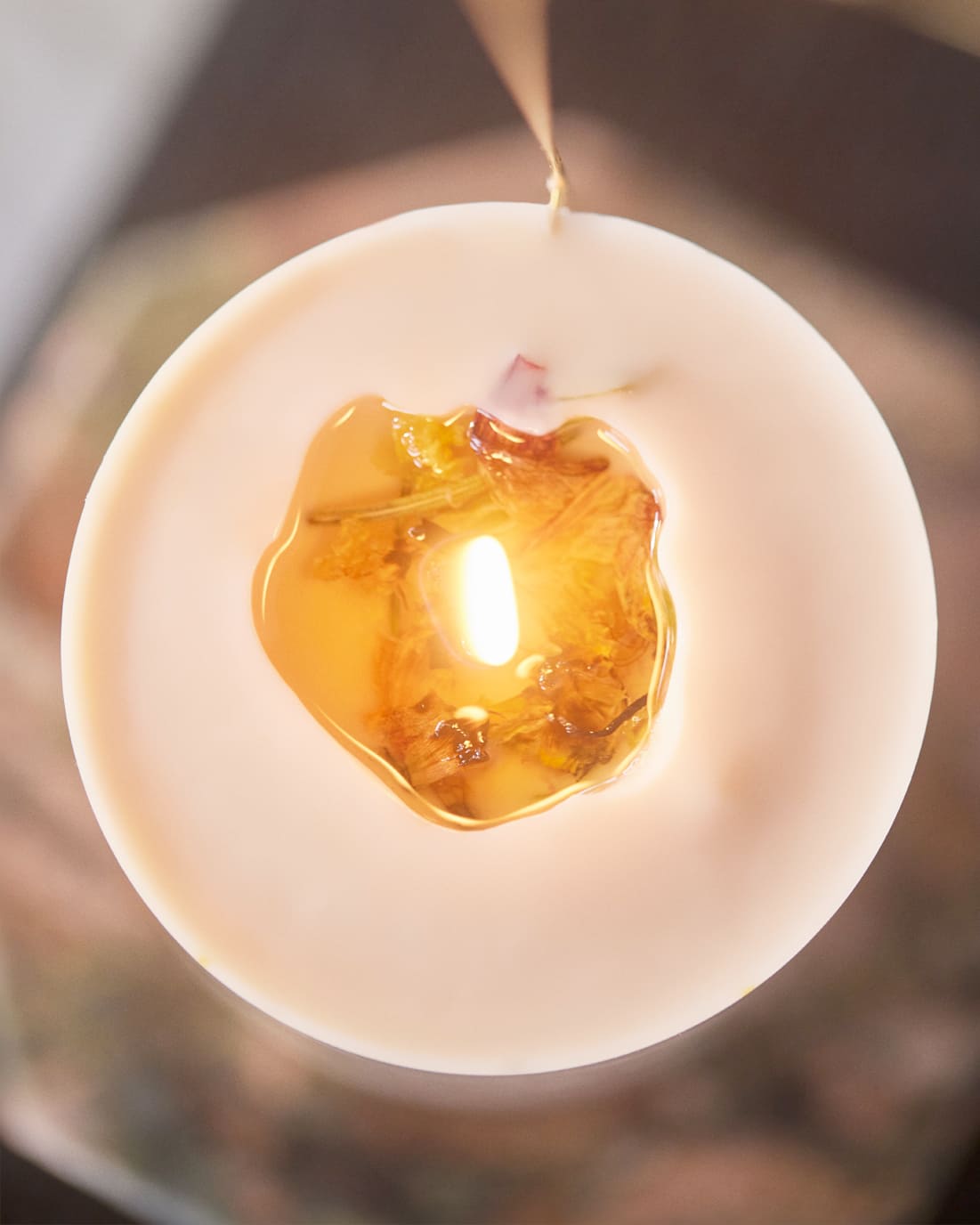
Olfactory meditation thus differs from candle meditation. The former relies on smell, breathing, and the emotional resonance of the fragrance. The latter mobilizes the flame, gaze, and visual concentration. HOZHO's energetic scented candles combine these two approaches: the flame helps to focus attention, while the synergy accompanies a true olfactory journey, conducive to meditation and recentering.
The Benefits of Olfactory Meditation
Olfactory meditation helps to slow down when the mind is overwhelmed, after a busy day, or during moments of emotional fatigue. It creates a pause to return to the body, breathe consciously, and establish a more serene relationship with our inner state.
By focusing attention on a scent, the mind gradually leaves the stream of thoughts to return to an immediate sensation. The fragrance offers the mind a focal point while conscious breathing helps to regulate heartbeats and cortisol production, gradually leading to a state of calm.
Certain fragrances help to reach this state more quickly by regulating the vibrational flows of your spaces. They thus create a favorable environment for concentration, writing, meditation, artistic activity, or gentle physical practice. The scent prepares the space and signals to the body that a different rhythm is beginning.
This work can be deepened within the framework of olfactory therapy, also called olfactotherapy, when emotional blockages, deep memories, or persistent feelings emerge.
>> Discover which energetic scented product to choose <<
How to Practice Olfactory Meditation at Home?
The practice can take place in a bedroom, living room, meditation corner, bathroom, or any quiet place where one can isolate oneself for a few minutes.
Before starting, prepare the atmosphere. Ventilate the room, reduce distractions, dim the light, set up a comfortable seat, and choose a pleasant texture: cushion, blanket, mat, or armchair. Visual, acoustic, physical, and olfactory comfort contributes to the quality of the experience.
Then select the fragrance that resonates with your current intention.
Once settled, close your eyes. Inhale gently through your nose. Observe the first impressions: is the scent fresh, warm, woody, floral, resinous, luminous? Does it awaken an image, an emotion, a bodily sensation? Then exhale slowly, allowing the body to relax.
The practice can follow three stages:
- a deep inhalation to welcome the fragrance;
- a time of observing sensory perception;
- a slow exhalation to relax the body and return to the breath.
Three minutes are enough to start. With practice, the session can last longer.
Essential oils require particular vigilance, as they are highly concentrated. Children, pregnant or breastfeeding women, asthmatics, epileptics, or people highly sensitive to odors should seek competent advice before use. A quality candle or home fragrance offers a gentler and better-dosed alternative.
Which Scents to Choose According to Your Intention?
The choice of a scent primarily depends on the desired intention. Do you want to soothe tensions, facilitate communication, support introspection, open the heart, or regain energy?
For olfactory meditation, the fragrance should remain pleasant, deep, evocative, and well-dosed. A too-powerful odor fatigues the nose and hinders concentration. A too-artificial scent saturates without providing aromatherapeutic or energetic benefits.
Natural aromas are always recommended. They are found in plant extracts, flowers, woods, resins, citrus fruits, aromatic plants, and vegetable essences. In high perfumery, they are meticulously crafted to offer a more nuanced olfactory quality than some pure essential oils, which can sometimes be too concentrated for daily meditative use.
Synthetic fragrances scent the air but offer neither the aromatherapeutic benefits of plant extracts nor the vibrational quality sought in an energetic ritual. Often linear and overpowering, they fill indoor air with volatile compounds and can bother sensitive individuals.
To Harmonize Energies
At HOZHO, the Harmonizing collection rebalances the vibrational frequencies of a place, helps to slow down the mind, and creates an atmosphere conducive to inner calm. It notably combines valerian, lavender, sandalwood, amber, and red rose.
This collection is suitable for relaxation rituals, yoga, meditation, or creative activities. It aids in elevating the spirit, reducing stress, increasing mental and spiritual strength, and dispelling negative energies. HOZHO's Harmonizing Rain home fragrance was notably recognized in the Lifestyle category of the Prix Feel Good Madame Figaro 2025.

HOZHO Harmonizing rechargeable candle and its marble case
To Create a Protective Cocoon
The HOZHO Protective collection safeguards the home from disruptive energies, helps to recenter after a period of psychological fatigue, and creates a more stable atmosphere. It features notes of myrrh, patchouli, cedar, and sacred frankincense.
Together, they build an ambiance conducive to introspection, rest, and a sense of security. This collection is suitable for evenings, reading times, and breathing exercises.
To Purify Spaces
The HOZHO Purifying collection cleanses stagnant energies. It is used when moving, during a change of season, or an emotionally intense period. It combines palo santo, white sage, bamboo, thyme, rosemary, fir, and juniper.
These purifying plants cleanse the vibrational frequencies of places, ward off negative energies, and facilitate energetic circulation.
To Vitalize
HOZHO's Vitalizing collection helps to regain momentum, awaken creativity, and inner dynamism. It combines grapefruit, bergamot, lemon, orange, pine, amber, pepper, and vetiver. It's a fresh, luminous, and peppery citrus synergy, designed to instill sparkling and positive energy.
This collection is suitable for mornings, workspaces, studios, writing times, brainstorming sessions, or dynamic physical practices.
To Cleanse the Memory of Walls
Sacred Native American Lands is for places steeped in history, periods of change, and rituals of renewal. Its synergy contains notes of leather, cedar, amber, blond tobacco, honey, spices, and candied plum. This energetic fragrance cleanses the memory of walls, releases stagnant energies, and opens the way for a vibrational renewal.
Olfactory Meditation, Aromatherapy, and Olfactotherapy: What are the Differences?
Olfactory meditation is a practice of presence. It uses a scent as a support for attention, breathing, and anchoring. It can be practiced alone, at home, for well-being, inner listening, and recentering.
Olfactory aromatherapy uses essential oils via the respiratory tract. It relies on the properties of plant essences but requires precautions for use, as essential oils are highly concentrated. Psycho-emotional aromatherapy focuses particularly on supporting certain emotional states with essential oils, without substituting for medical treatment.
Olfactotherapy is a support practice that uses scents to explore olfactory memory, emotions, the unconscious, and certain deep feelings. The reported benefits often concern emotional exploration, anchoring, reconnecting with certain memories, or verbalizing inner sensations.
Aromachology, on the other hand, studies the influence of odors on behaviors, emotions, and perceptions. It helps to understand why certain scents soothe, energize, comfort, or evoke memories.
These approaches overlap, but their frameworks differ.
Olfactory Meditation: Your Questions, Our Answers
How Does Olfactory Meditation Work?
Olfactory meditation combines a scent, slow breathing, and conscious attention. Aromatic molecules are perceived by the nose, then interpreted by the brain. The person observes the sensations, emotions, or memories that appear, without trying to control them.
Can olfactory meditation be practiced without essential oils?
Yes. A scented candle, an interior perfume, a diffuser, fragrant resins, aromatic plants, or a natural fragrance can serve as support. Meditation with essential oils remains possible, but it requires precautions, as essential oils are highly concentrated.
What scent to choose for an olfactory meditation?
The choice depends on the intention (stress management, better communication, introspection, creativity, etc.) and partly determines the aromatic profile chosen. The HOZHO collections allow guiding this choice according to five functions: Harmonizing, Protecting, Purifying, Vitalizing. Terres Sacrées Amérindiennes, for its part, is conducive to vibrational reset.
How do scents affect emotions?
Scents maintain a close link with the limbic system, involved in emotions and memory. A scent can therefore quickly create a sensation of calm, comfort, energy, or sometimes rejection. In mindfulness meditation, this reaction becomes a support for observation.
Why does a scent awaken a memory?
A scent can awaken a memory because the sense of smell has a direct link with the brain areas involved in memory and emotions. The brain associates certain scents with places, people, seasons, or life moments. A fragrance can thus bring back an image, an emotion, or an old bodily sensation with particular intensity.
How to use scents to recenter yourself?
Settle into a quiet place. Inhale slowly through the nose. Observe the sensations caused by the aromas. Exhale, releasing tension. Repeat this cycle for a few minutes. Over time, this scent can become an anchoring point.