
Psychology of the home: how your interior influences your well-being

The psychology of living spaces studies how our living environments influence our mood, stress levels, and emotional balance. It is a key concept for understanding the link between the home and the emotional state of its occupants, and more broadly, between housing and well-being at home .
Fatigue, stress, difficulty switching off, a house that's never really tidy, an electric atmosphere, an omnipresent mental load… What if your home contributed as much to your well-being as your diet or your exercise routine?
Our home is not just a setting, but an emotional environment that influences mood, sleep quality, recovery, and communication. For many, home is simultaneously a refuge, a workspace, and a place to recharge: it can therefore be a catalyst for a better quality of life.
HOZHO, creator of energizing scented care products for the home and body , explains in this article:
- What is the psychology of housing ?
- The keys to understanding your environment differently.
- Rituals to establish to transform your interior.
What is the psychology of housing? Definition, origins, links with environmental psychology
The psychology of living spaces is a branch of environmental psychology that examines the impact of living environments on behavior, emotions, and well-being. While environmental psychology also encompasses public spaces, offices, and nature, the psychology of living spaces focuses specifically on the home.
This approach shares some similarities with feng shui, as it relies particularly on interior architecture , the flow of movement within rooms , and decoration . Some recommendations are even found in these different disciplines, to such an extent that a hybrid concept has developed: domotherapy , which lies at the crossroads of the psychology of living spaces, conscious decoration , and energy work.
However, unlike feng shui, the psychology of living spaces is not an energy theory; it is not based on the concepts of vibrational flows or yin and yang. It focuses on the effects of the indoor environment on stress management, emotions, and behaviors, and seeks to understand the link between home and emotional state .
This psychology of interior space shows that we react not only to visible decoration, but also to smells, sounds, light, and air circulation. It considers both the overall sensory atmosphere and the physical organization of the space.
This discipline therefore offers methods of mindful decorating and layouts designed to harmonize spaces . It connects the structure of the space, the sensory atmosphere, and daily rituals to create a truly soothing and restorative interior. Numerous studies confirm this approach: according to a review published in Frontiers in Psychology , the conditions of the indoor environment explain up to 30% of the psychological well-being of the occupants .
This highlights how much the way we design, light, soundproof and scent our spaces profoundly influences our well-being at home .
How our home environment impacts our emotions, stress levels, and mental balance
The psychology of housing offers a new way of understanding the home by highlighting its impact on mental health . It shows that we can no longer consider housing as simply a living environment, but as an active factor in managing stress, emotions, and recovery.
Urban stress , a genuine public health issue, combined with sometimes poor indoor air quality , can be mitigated through better design of living spaces. These days, we spend most of our time indoors: the challenge of creating a calming indoor environment is therefore far from trivial.
Sensory environments (noise, light, clutter, smells) do indeed play a direct role in our anxiety levels. Harsh lighting, constant background noise, or irritating smells can maintain a state of continuous tension, even when we think we are "resting."
Piles of objects, visible emails and files, clothes waiting to be put away, and all the rooms associated with work all contribute to mental load . The psychology of living spaces therefore proposes improving emotional management through the interior environment : by working on what we see, what we hear, what we smell, we also modify what we feel.

The psychology of housing links our environment with our emotional balance
Recognizing a home that no longer benefits us: signs, feelings, and typical situations
Certain everyday signs can reflect a disturbing indoor environment. These can include general disarray, rooms that are avoided without really knowing why, a cold atmosphere, or constant physical tension, even at bedtime.
If you live as a couple or with a family, this can also result in recurring tensions, communication problems, and repeated disagreements over details.
When home ceases to be a refuge , no longer allowing one to recharge or let go, mental overload sets in. Various symptoms then appear: chronic fatigue, difficulty falling asleep, a feeling of never being "enough".
These signals are all indicators of your feelings, and may mean that a change is needed in your conscious environment .
The psychology of housing invites us to consider the house as a mirror of our inner state: by observing our rooms, we also observe our priorities, our conflicts, our relationship to time.
In this context, HOZHO's energetic scented home care products are valuable tools to support a transformation and establish new rituals.

The main levers of the psychology of housing
Rethinking the structure of space to lighten the mental load
An interior where it's difficult to move around, with cluttered areas or blurred boundaries between work and rest, fosters stress and confusion. Chronic disorganization fuels the feeling of "never being up to date," of being overwhelmed daily, and directly increases mental workload .
The psychology of living spaces encourages clarifying the purpose of each room: one area for rest, one for work, one for creativity, and one for socializing. By clearly defining these spaces, we send consistent signals to the brain and nervous system: here I work, here I rest, here I cook, here I play. It's about harmonizing the energy of your living space by aligning function, atmosphere, and intention.
Therefore, carefully define each space in your home according to its purpose and simplify movement. You should be able to enter and exit each room without having to navigate an obstacle course. This layout work is a first step in creating a home sanctuary adapted to each living space and each time of day.
Playing with light, sounds and materials to soothe the nervous system
At the end of the 18th century, the French state, following the example of England, introduced a tax on doors and windows. This tax applied to openings onto the street, a courtyard or a garden, and directly affected property owners.
To reduce their expenses, many people, especially those in modest circumstances, chose to block up some of their windows. This reduction in air and natural light contributed to making many homes unsanitary, a situation Victor Hugo notably addresses in Les Misérables . History illustrates, in its own way, how essential access to light and air is to physical and mental health.
Natural light is indeed essential for regulating our sleep, supporting our internal clock, and contributing to the production of vitamin D, which is itself linked to emotional balance . Maximize natural light as much as possible, and when this isn't feasible, use multiple sources of warm and adjustable supplemental lighting.
Similarly, consider the sounds: it is sometimes helpful to play soft background noise (soothing music, white noise) to mask other noises. The sensory environment of sound plays a major role in the perception of safety and comfort.
Materials also matter: soft textiles, surfaces that are pleasant to the touch and easy to wash, and understated decor. Here again, the goal is not aesthetics for its own sake, but the art of living that promotes a calm nervous system.
Ask yourself these questions: when do I use this room? What feeling do I want to cultivate there? By consciously working on the sensory atmosphere (light, sounds, materials, smells), we participate in developing our sense of well-being at home .
Smell as a lever: indoor fragrances, the energy of places and air quality
Olfaction is central to the psychology of living spaces , as well as to many energy-related approaches. Indoor air quality influences two constantly interacting aspects:
- the biological aspect: lack of oxygen, excess CO₂ and air pollution impair brain function, concentration and recovery;
- The psychological aspect: odors act as signals, influencing the limbic system, hormones, and memory. This is the principle behind aromatherapy and olfactotherapy. An odor can thus promote a feeling of well-being or, conversely, maintain a state of stress.
In energy-based disciplines, the olfactory aspect is often perceived as the “soul” of plants, which diffuses into the environment to act on the energies of places . A well-chosen synergy can thus support a ritual of energetic purification, harmonization, or protection.
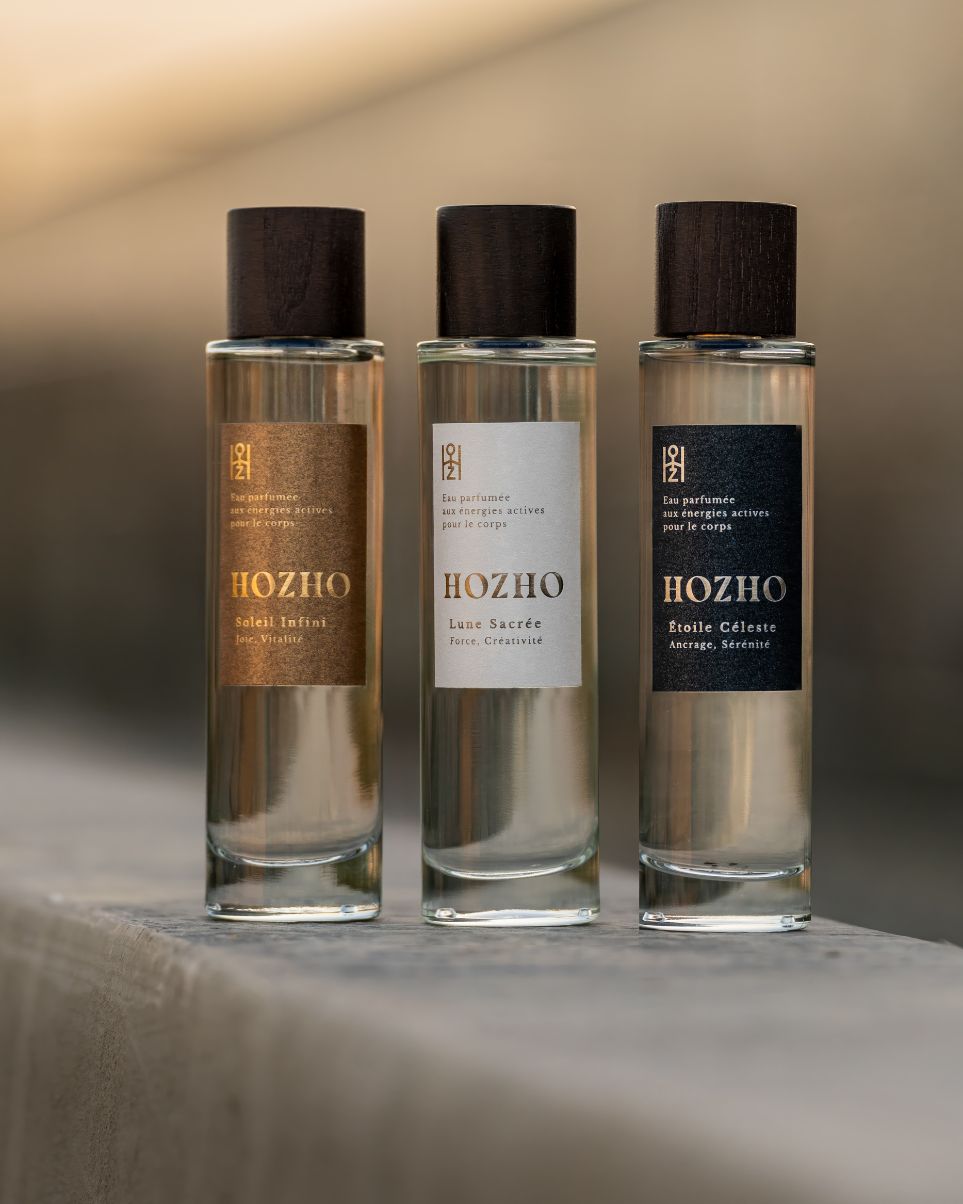
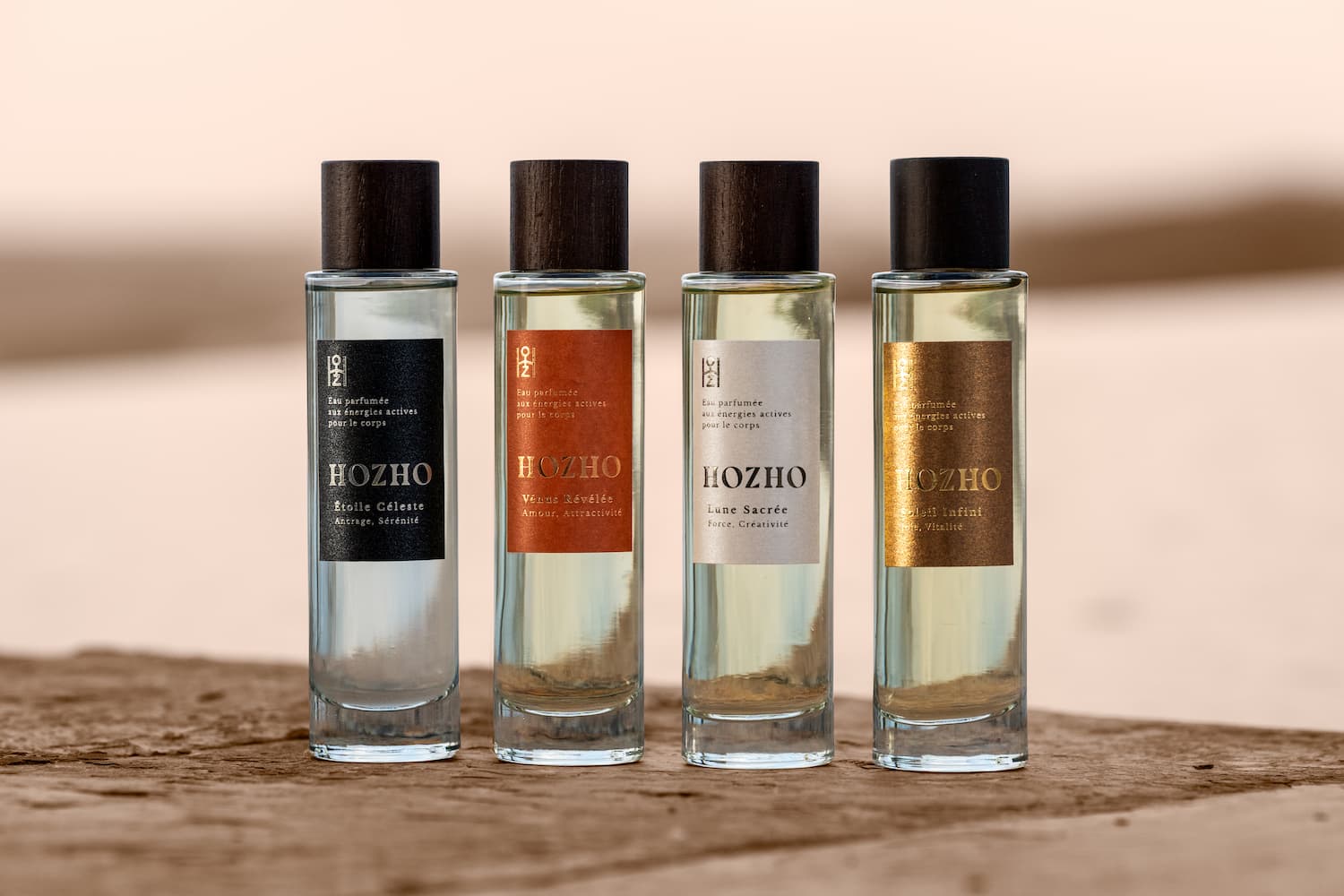
At HOZHO, we act on these different levels with home fragrances composed of exceptional ingredients with high aromatic and energetic properties.
Non-toxic, non-polluting and made in France , our perfumes are part of a holistic vision where fragrances, well-being and energies complement each other harmoniously.
Therefore, our ranges are available in energizing fragrances adapted to all needs:
-
Purifying range : based on white sage , palo santo , thyme, rosemary, fir and juniper, with a herbaceous fragrance designed to purify the energy of the home naturally and cleanse the air of stagnant energies.
-
Harmonizing range : based on plants with relaxing properties such as valerian, lavender, sandalwood , amber and red rose; this synergy, awarded the Madame Figaro Feel Good Prize in October 2025, promotes calmness and reconnection to oneself.
-
Protective Range : myrrh , oud, oak , cherry, holy frankincense and cedar create a synergy that transforms your home into a regenerating and protective cocoon .
-
Vitalizing range : grapefruit, orange, bergamot, lemon, pine, amber, pepper and vetiver give enthusiasm, stimulate energy and fight against gloom.
- Sacred Native American Lands range : accords of leather, amber, blond tobacco, honey, candied plum and cedar, designed to cleanse the memory of the walls .
HOZHO offers energizing home fragrances that are fully aligned with the psychology of living spaces , influencing the emotional atmosphere of each room. The blends are created using approximately thirty plants, chosen for their effect on the energy of the space and the quality of presence of the people who live there.
Get a personalized diagnosis to find the energizing fragrance that's right for you.
Home psychology rituals with HOZHO
Daily rituals to transform your home into an emotional refuge
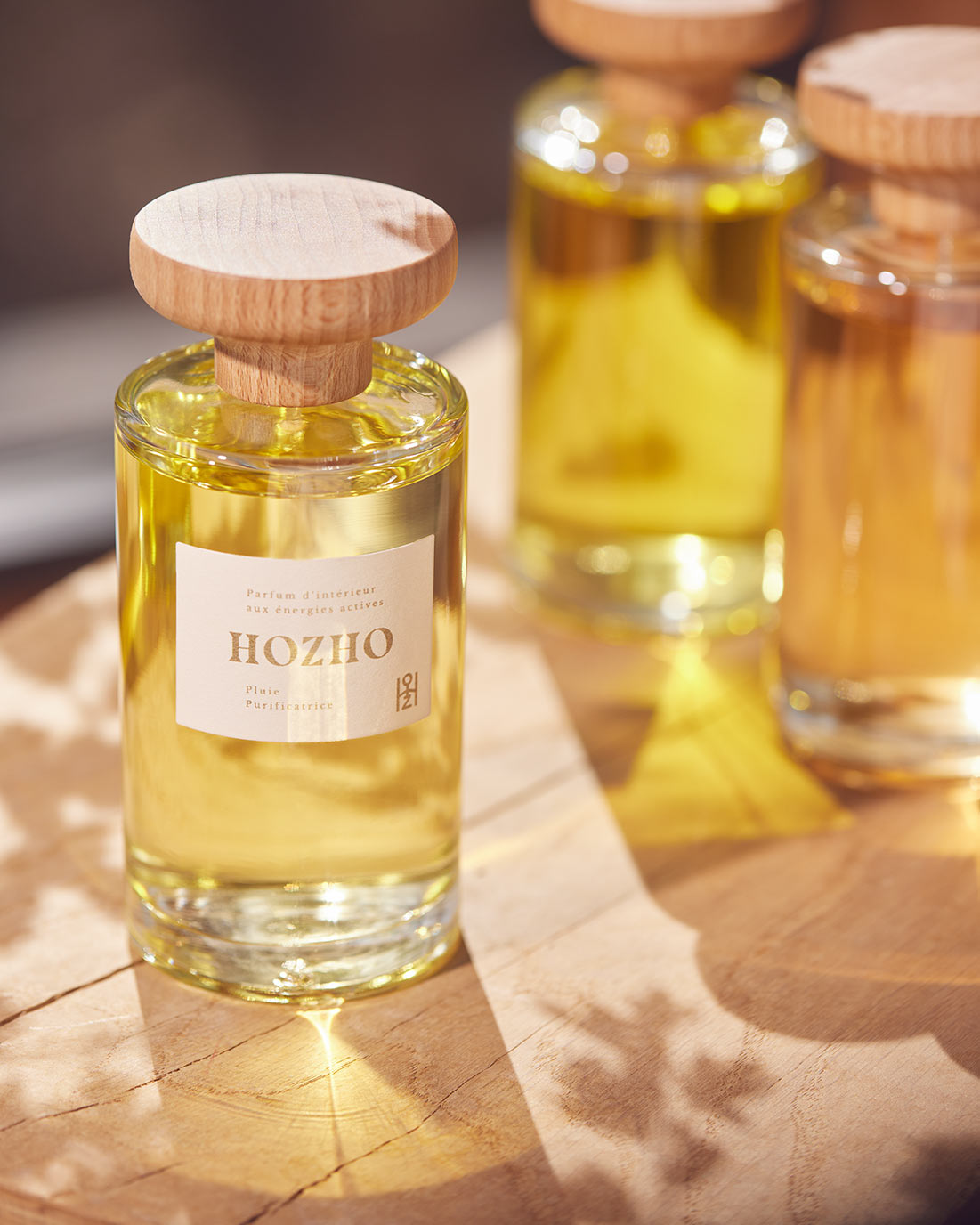
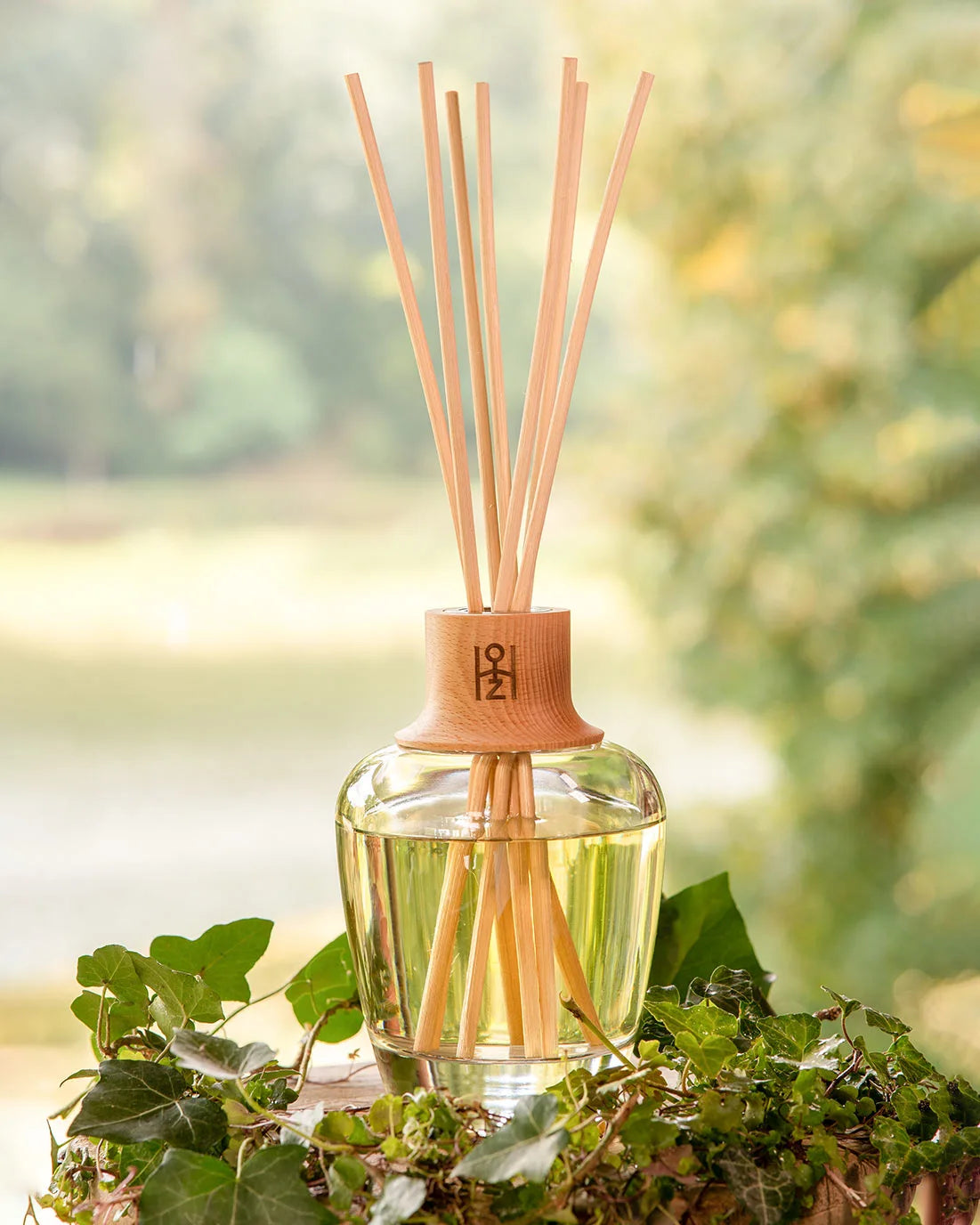
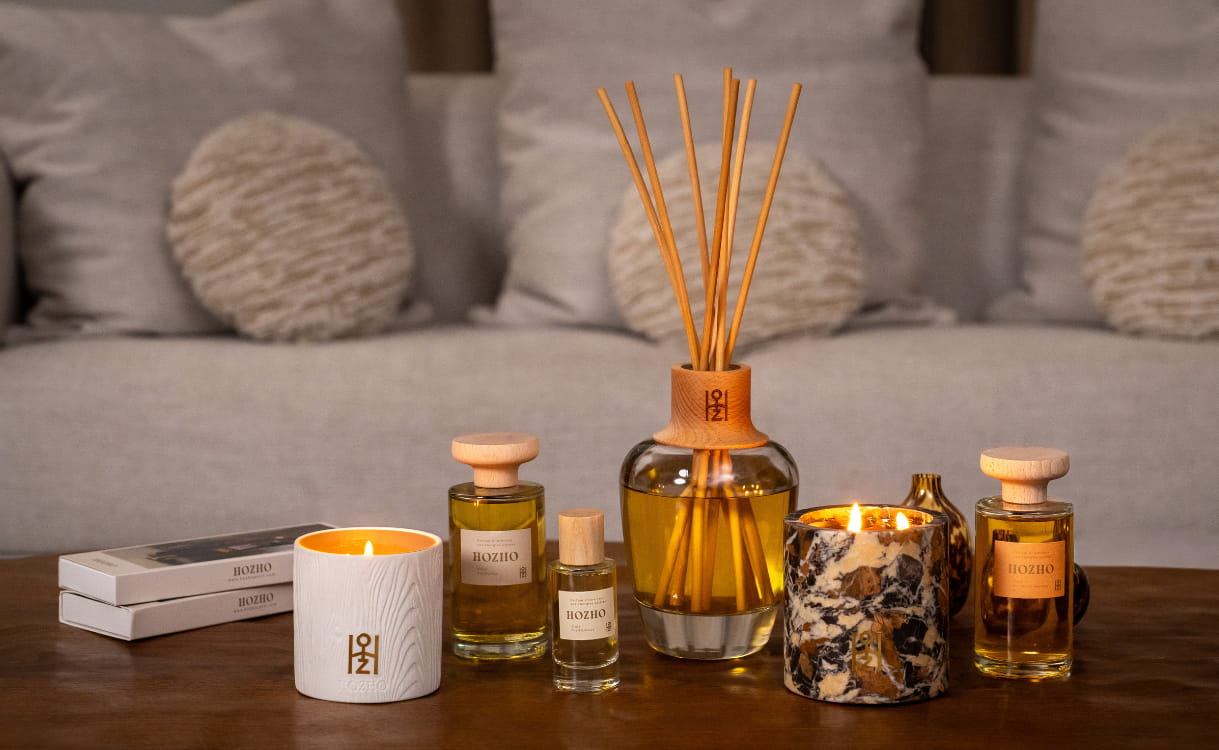
HOZHO Rains, Flames and Breezes harmonize, protect, purify, vitalize the energies of your living spaces and integrate perfectly into every daily ritual .
These ranges offer complementary fragrances and properties, suitable for all activities and all seasons:
- morning rituals to get moving (Vitalizing Range)
- Evening rituals to disconnect at home or create (Harmonizing or Protective ranges),
- Purification rituals at the end or beginning of a new cycle, a new project (Purifying Ranges and Sacred Native American Lands).
Example of a “return from work” ritual:
- Open a window for a few minutes to refresh the air.
- change clothes, take a shower,
- Tidying your house for 15 to 30 minutes while listening to soft music
- scent your spaces with an energizing fragrance treatment.
- Breathe slowly, keep a gratitude journal, or rest for a few minutes.
This type of ritual helps to mark a clear transition between the professional day and the personal evening.
Ease tensions and boost concentration in the office or while working remotely
The psychology of living spaces is aimed at both individuals who want to feel better at home and professionals who wish to improve creativity, concentration and well-being at work.
The problems are often the same: noisy open space, teleworking in the living room, difficulty separating professional from personal life, feeling of never really switching off.
To reduce tension and boost motivation, rituals can be established. For example, you can organize your workspace, create a specific relaxation zone, limit visual clutter, and choose an energizing home fragrance that relaxes and promotes concentration.
The non-toxicity of indoor products is essential here, as their use can be frequent and prolonged. HOZHO products offer a demanding yet respectful alternative for those who spend long hours in the same space, whether working in person or remotely.
Spas, hotels, guesthouses: integrating the psychology of the home into the customer experience
Luxury hotel and spa management is increasingly incorporating the psychology of living spaces into its interior design projects. Creating spaces where guests feel truly welcome and at ease is a crucial challenge in this sector. The guest experience and the ambiance of the premises are becoming a strategic differentiator.
For a spa or hotel, working with the psychology of the spa and hotel environment means designing customer journeys where every space is conducive to relaxation and leisure. Reception, changing rooms, waiting areas, treatment rooms, guest rooms… Each area can be conceived as an “emotional chapter” with its own lighting, sound, and signature scent . This is where signature scent and hospitality psychology intersect.
HOZHO's fragrance synergies enhance the perception of quality, improve brand recall, and promote a sense of well-being for your clientele. They contribute to creating a unique energetic and sensory signature for your establishment, consistent with its positioning.
Sources:
Zhang, X., Wargocki, P., & Lian, Z. (2021). Human responses to indoor environmental quality (IEQ) in homes: A systematic review. Frontiers in Psychology , 12, 641289. https://doi.org/10.3389/fpsyg.2021.641289